Accelerometer TP-ACC20
€ 432.00
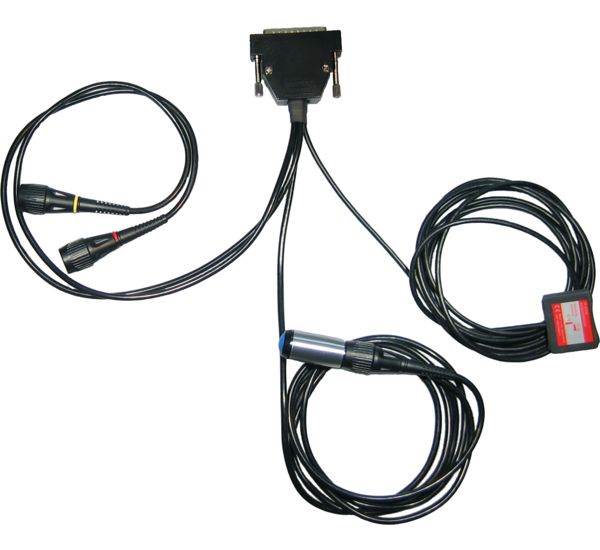
The Accelerometer TP-ACC20 is a dual axis accelerometer combined with a manual, external trigger button, designed to be used with the Handyscope HS3, Handyscope HS4, Handyscope HS4 DIFF, WiFiScope WS4 DIFF (order code TP-ACC20-25) and Handyscope HS5, Handyscope HS6, Handyscope HS6 DIFF, WiFiScope WS5, WiFiScope WS6, WiFiScope WS6 DIFF (order code TP-ACC20-09).
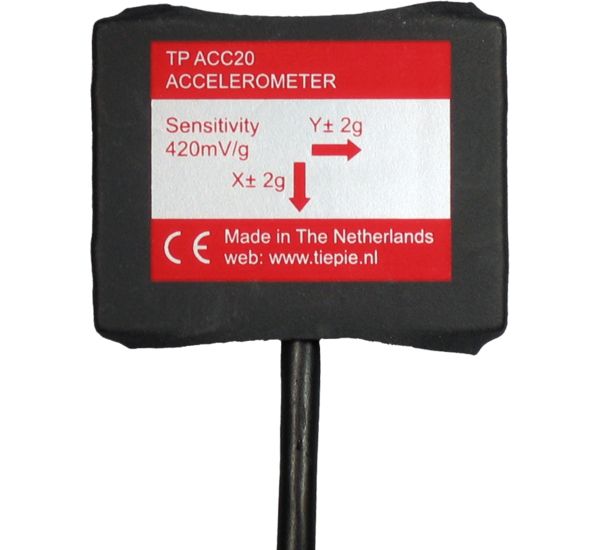
The dual accelerometer is a low power dual axis accelerometer with voltage outputs. It can measure accelerations in two axes, up to ± 2 g. It can measure both dynamic acceleration and static acceleration (gravity).
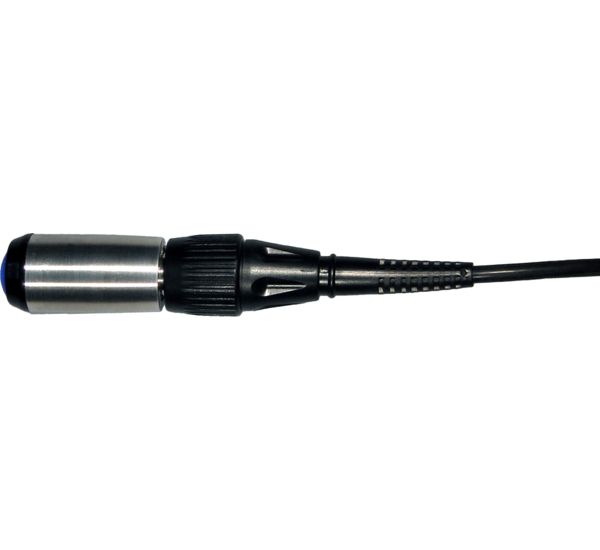
The manual external trigger button can be used to trigger measurements in situations where no trigger condition can be derived from the input signals.
- Accelerometer TP-ACC20 - 25
- Accelerometer TP-ACC20 - 09
Order code: TP-ACC20-25
EAN: 7423621853849
Price: 432.00
Category: Miscellaneous
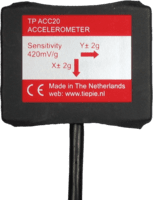
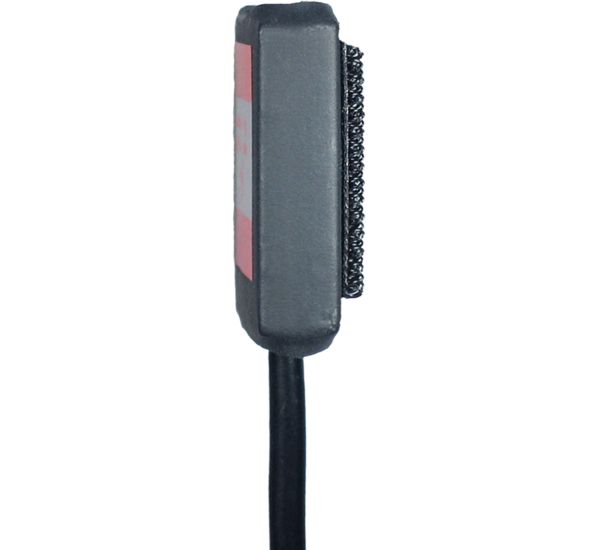
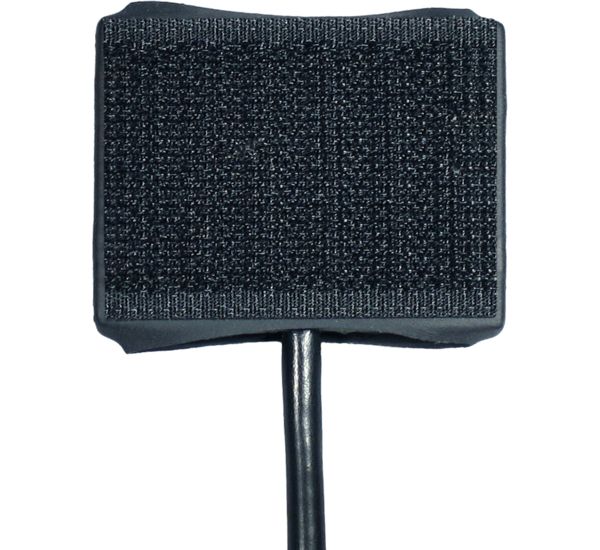
The acceleration sensor of the Accelerometer TP-ACC20 is placed in a small package with a long, thin flexible cable. The package contains strong magnets to attach the sensor to magnetic (steel) surfaces without the need of screws or clamps. One side of the package contains a patch of velcro, to attach the sensor to fabric surfaces.
The Accelerometer TP-ACC20 also contains a manual, external trigger button. This button can be used to manually trigger measurements in situations where no trigger condition can be derived from the input signals. The manual external trigger button has a solid aluminum body and is fitted with a female BNC connector. A long flexible cable with a male BNC connector is used to connect the button to the instrument.

The table below shows detailed specifications of the Accelerometer TP-ACC20.
Accelerometer sensor | ||
|---|---|---|
| Sensor input range | ± 2 g | |
| Sensitivity | 420 mV/g typical | |
| Zero g bias level | 1.5 V typical | |
| Zero g offset vs. temperature | < ± 0.5 mg/°C | |
| Bandwidth | 500 Hz | |
| Sensor resonant frequency | 5.5 kHz typical | |
| Power supply | from instrument extension connector, < 0.5 mA | |
| Dimensions | ||
| Width | 35 mm | |
| Height | 30 mm | |
| Thickness | 9 mm | |
| Weight | 20 g | |
| Cable length | 2.5 m | |
Manual external trigger button | ||
| Dimensions | ||
| Length (without cable) | 47 mm | |
| Diameter | 18 mm | |
| Connector at button | female BNC connector | |
| Connector at cable | isolated male BNC connector | |
| Cable length | 2 m | |
Instrument connector | ||
| TP-ACC20-09 | TP-ACC20-25 | |
| Connector type | 9 pin male D-Sub connector | 25 pin male D-Sub connector |
| Suitable instruments | Handyscope HS5 Handyscope HS6 Handyscope HS6 DIFF WiFiScope WS5 WiFiScope WS6 WiFiScope WS6 DIFF | Handyscope HS3 Handyscope HS4 Handyscope HS4 DIFF WiFiScope WS4 DIFF |
| Accelerometer sensor signal connection | 2 | |
| Connection | isolated male BNC connector | |
| Cable length | 50 cm | |
| Total weight | 200 g | |
The Accelerometer TP-ACC20 is available in 2 models with different connectors, a 25 pin and a 9 pin D-sub connector.
| Order code | EAN | Price |
|---|---|---|
| TP-ACC20-25 | 7423621853849 | € 432.00 |
| TP-ACC20-09 | 7423629642681 | € 432.00 |
The Accelerometer TP-ACC20 - 09 can be used with the:
The Accelerometer TP-ACC20 - 25 can be used with the:
| Description | Version | Remarks | Size | |
|---|---|---|---|---|
| Accelerometer TP-ACC20 user manual | 1.3 | English | 875.29 kB | download |
RELATED ARTICLES